Expert Insights on Neurological Research

Shutterstock 1063712879 Scaled

How brain injury can influence violent crime

Traumatic brain injury can profoundly alter impulse control, emotional regulation, and decision-making, increasing the likelihood of aggressive and criminal behaviour. Damage to the prefrontal cortex and limbic system disrupts key neurological functions, while imbalances in neurotransmitters exacerbate emotional instability. Early-life injuries, untreated trauma, and environmental factors further heighten risks. Advances in neurorehabilitation and evolving public policies are reshaping approaches to prevention, treatment, and justice, illuminating the complex interplay between brain injury and violent behaviour.

How brain injury can influence violent crime Read Post »

{The Link Between

The Link Between mild traumatic brain injury and cognitive impairment

The relationship between mild traumatic brain injury (mild TBI) and cognitive impairment has become a critical area in contemporary neurological research. Understanding the link requires a closer look at how even seemingly minor head traumas can initiate complex biological and psychological processes that affect brain function over time. Mild TBI,…

The Link Between mild traumatic brain injury and cognitive impairment Read Post »

Understanding quantum thought through mathematical frameworks

Understanding quantum thought through mathematical frameworks

Dissatisfaction with classical models of reasoning led researchers to explore quantum principles within cognitive science, offering novel explanations for paradoxical human behaviour. Quantum cognition, leveraging concepts like superposition, contextuality, and entanglement, challenges traditional Bayesian frameworks, providing dynamic models of decision-making, memory, and language. By embracing quantum mathematics, this emerging field captures the fluid, context-sensitive nature of thought, reshaping theories of human reasoning and inspiring advances in artificial intelligence, neuroscience, and mental health research.

Understanding quantum thought through mathematical frameworks Read Post »

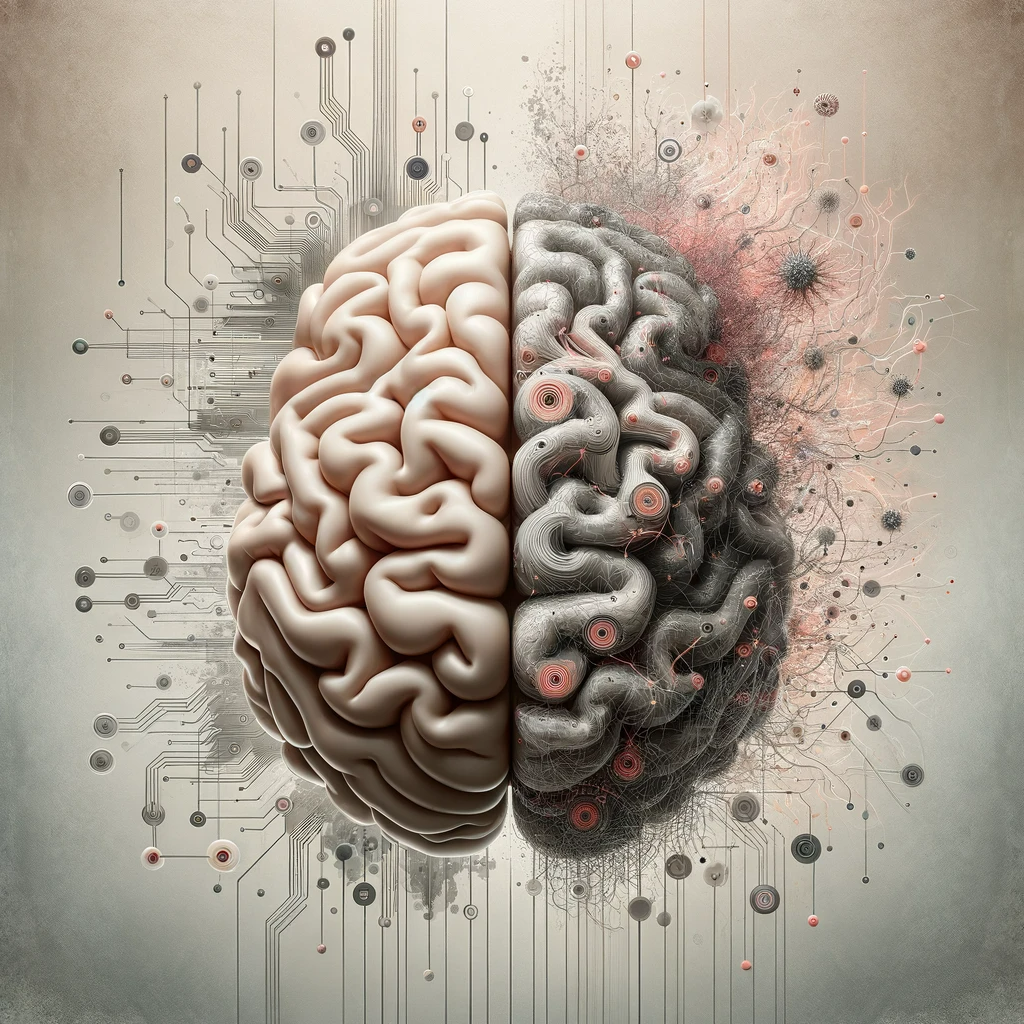
DALL·E 2023 11 18 09.04.23 An Illustrative And Conceptual Image For An Article About The Disorder Of Information Processing In Functional Neurological Disorder FND. The Image

Physiotherapy for treating functional neurological disorder

Functional neurological disorder (FND) presents with genuine, disabling symptoms such as weakness, tremor, and non-epileptic seizures, yet lacks structural brain damage. Emerging research reveals FND arises from disrupted brain network activity, shifting treatment towards multidisciplinary, neuroplasticity-focused rehabilitation. Physiotherapy plays a key role by retraining movement patterns, promoting self-efficacy, and addressing secondary complications through tailored interventions. Effective communication, patient education, and attention to psychological factors are crucial for recovery. Advances in technology and integrated care models are reshaping the future of FND management, offering new hope for lasting functional improvements.

Physiotherapy for treating functional neurological disorder Read Post »

Understanding mild traumatic brain injury in clinical practice

Understanding mild traumatic brain injury in clinical practice

Mild traumatic brain injury (mTBI) involves subtle yet significant disruptions to brain function following a head impact, often without visible damage. Symptoms can be wide-ranging, from cognitive difficulties to emotional and physical challenges, sometimes persisting long after the injury. Accurate diagnosis relies on clinical judgment, supported by imaging and cognitive assessments. Rehabilitation adopts a multidisciplinary approach, aiming to restore functional abilities and mitigate long-term complications. Despite its “mild” label, mTBI can profoundly affect recovery trajectories, demanding careful clinical management and ongoing research into new therapeutic strategies.

Understanding mild traumatic brain injury in clinical practice Read Post »

Scroll to Top