Post-Concussion Syndrome

Post concussion syndrome diagnosis and management strategies

Post concussion syndrome diagnosis and management strategies

Post concussion syndrome (PCS) is a complex condition where symptoms persist long after a mild traumatic brain injury. With physical, cognitive, emotional, and sleep-related symptoms varying widely by individual, accurate early diagnosis is critical. Factors like previous concussions, mental health history, and neurochemical changes influence recovery. Multidisciplinary, personalised treatment strategies, including rehabilitation, psychological support, and graded exercise, are key to promoting functional restoration and improving long-term outcomes.

Post concussion syndrome diagnosis and management strategies Read Post »
{The Link Between

The Link Between mild traumatic brain injury and cognitive impairment

The relationship between mild traumatic brain injury (mild TBI) and cognitive impairment has become a critical area in contemporary neurological research. Understanding the link requires a closer look at how even seemingly minor head traumas can initiate complex biological and psychological processes that affect brain function over time. Mild TBI,…

The Link Between mild traumatic brain injury and cognitive impairment Read Post »

Understanding mild traumatic brain injury in clinical practice

Understanding mild traumatic brain injury in clinical practice

Mild traumatic brain injury (mTBI) involves subtle yet significant disruptions to brain function following a head impact, often without visible damage. Symptoms can be wide-ranging, from cognitive difficulties to emotional and physical challenges, sometimes persisting long after the injury. Accurate diagnosis relies on clinical judgment, supported by imaging and cognitive assessments. Rehabilitation adopts a multidisciplinary approach, aiming to restore functional abilities and mitigate long-term complications. Despite its “mild” label, mTBI can profoundly affect recovery trajectories, demanding careful clinical management and ongoing research into new therapeutic strategies.

Understanding mild traumatic brain injury in clinical practice Read Post »

6e5c27c1 085c 4563 9cd5 E3d00dc3a381

Exploring the Role of Salivary Biomarkers in Mild Traumatic Brain Injury Diagnosis

Abstract:
Mild Traumatic Brain Injury (mTBI) is a significant public health concern, with its diagnosis often hindered by subtle symptoms and limitations in traditional testing methods. Salivary biomarkers have emerged as a promising, non-invasive alternative for mTBI diagnosis. These biomarkers, including S100B protein, Neurofilament Light Chain (NfL), microRNAs (miRNAs), and extracellular vesicles (EVs), offer insights into neuroinflammatory processes and neuronal damage. Saliva’s accessibility and ease of collection position it as a cost-effective tool for early diagnosis and monitoring. Despite their potential, challenges such as standardization, biological complexity, and the need for validation persist. Advancements in research, technology, and integration with clinical tools could establish salivary biomarkers as a pivotal component in mTBI assessment, enabling more precise and personalized care.

Exploring the Role of Salivary Biomarkers in Mild Traumatic Brain Injury Diagnosis Read Post »

9C856E03 1923 4A1F A0FA EEE109C274C2

Understanding “Internal Fake News”: The Link Between Concussion, Sensory Alterations, and Emotional Health

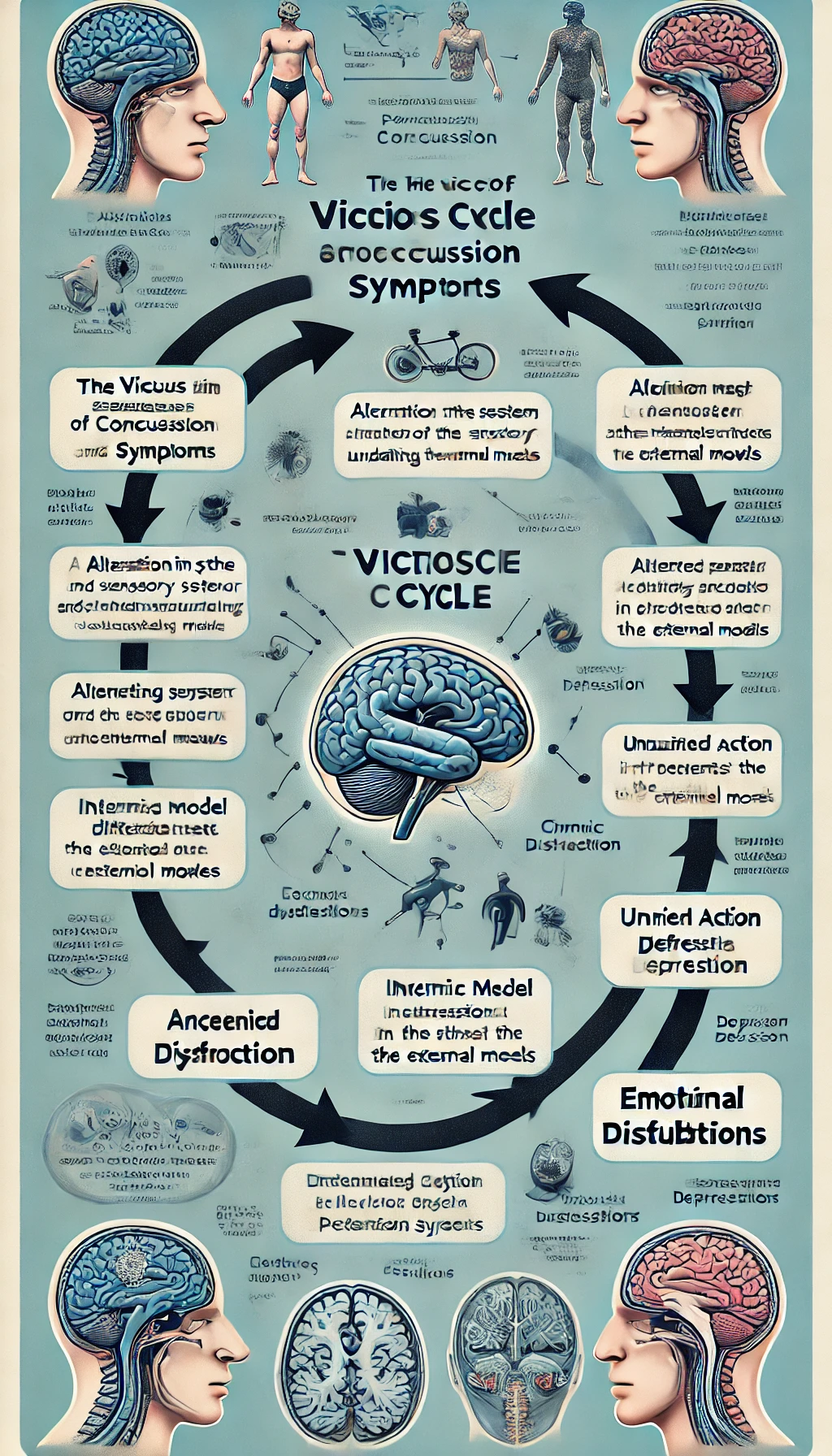
Concussions and post-concussion symptoms significantly impact the brain’s ability to process and integrate sensory information, leading to a phenomenon termed “internal fake news.” This occurs when altered sensory perceptions distort internal models, affecting decision-making and leading to a cascade of negative consequences including chronic stress, anxiety, and depression. The cerebellum’s role in integrating multisensory information is crucial for updating these internal models accurately. Disruptions in this process, commonly seen in concussion patients, result in a vicious cycle of emotional disturbances. Early intervention and a multidisciplinary approach are essential for mitigating these effects and supporting recovery.

Understanding “Internal Fake News”: The Link Between Concussion, Sensory Alterations, and Emotional Health Read Post »

Scroll to Top