Top Posts
Post-traumatic headache: Treatment Overview
The starry night
Distinguishing Mild Neurocognitive Disorder Due to TBI in...
The Moors Murders: A Chilling Crime and the...
Acute Mild Traumatic Brain Injury (Concussion) in Adults:...
Understanding Functional Neurological Disorder (FND): A Comprehensive Guide...
The Neurobiology of a Killer: Understanding Christopher Halliwell’s...
Traumatic Brain Injury and Cognitive Decline: Exploring the...
Santiago Ramón y Cajal: The Father of Modern...
Exploring the Role of Salivary Biomarkers in Mild...
  • Home
  • Traumatic brain injury
  • Functional neurological disorders
  • Dementia
  • Headaches
myneuronews.com
"Insights into mTBI, PCS, and FND — One Synapse at a Time" A bit more creative, nodding to neuroscience roots while covering your full range.
Tag:

s100b

  • Traumatic brain injury

    Neurobiomarkers for Traumatic Brain Injury: Comparison of Serum Values Within 24 Hours of Injury With Glasgow Coma Scale (GCS) Scores in a Prospective Cohort Trial

    by myneuronews July 2, 2025
    by myneuronews July 2, 2025

    Neurobiomarkers in Traumatic Brain Injury Neurobiomarkers represent measurable indicators located in the body, which provide …

    Read more
    0 FacebookTwitterPinterestEmail
  • Traumatic brain injury

    Uncovering injury-specific proteomic signatures and neurodegenerative risks in single and repetitive traumatic brain injury

    by myneuronews June 22, 2025
    by myneuronews June 22, 2025

    Injury-Specific Proteomic Signatures In recent research, a growing body of evidence has revealed that distinct …

    Read more
    0 FacebookTwitterPinterestEmail
  • Traumatic brain injury

    Advances in Circulating Biomarkers for Neurodegenerative Diseases, Traumatic Brain Injuries, and Central Nervous System Tumors

    by myneuronews June 18, 2025
    by myneuronews June 18, 2025

    Advancements in Biomarker Discovery Significant progress has been made in the realm of biomarker discovery, …

    Read more
    0 FacebookTwitterPinterestEmail
  • Traumatic brain injury

    Imaging a concussion and the ensuing immune response at the blood-brain barrier

    by myneuronews May 19, 2025
    by myneuronews May 19, 2025

    Understanding the Blood-Brain Barrier The blood-brain barrier (BBB) is a highly selective permeability barrier that …

    Read more
    0 FacebookTwitterPinterestEmail
  • Traumatic brain injury

    Sensory driven neurophysiological mechanisms of concussion: a parsimonious and falsifiable theory

    by myneuronews May 15, 2025
    by myneuronews May 15, 2025

    Overview of Neurophysiological Mechanisms Understanding the neurophysiological mechanisms underlying concussion involves delving into the complex …

    Read more
    0 FacebookTwitterPinterestEmail
  • Dementia

    Unraveling sex differences in Alzheimer’s disease and related endophenotypes with brain proteomes

    by myneuronews May 9, 2025
    by myneuronews May 9, 2025

    Research Context The study of Alzheimer’s disease (AD) has gained considerable momentum as researchers explore …

    Read more
    0 FacebookTwitterPinterestEmail
  • Traumatic brain injury

    On-Field Diagnosis and Management of Sports-Related Concussion in Pediatric Athletes

    by myneuronews May 1, 2025
    by myneuronews May 1, 2025

    Understanding Concussion in Pediatric Athletes Concussions are a form of traumatic brain injury that occur …

    Read more
    0 FacebookTwitterPinterestEmail
  • BiomarkersTraumatic brain injury

    Exploring the Role of Salivary Biomarkers in Mild Traumatic Brain Injury Diagnosis

    by Ioannis Mavroudis November 16, 2024
    by Ioannis Mavroudis November 16, 2024

    Abstract: Mild Traumatic Brain Injury (mTBI) is a significant public health concern, with its diagnosis …

    Read more
    0 FacebookTwitterPinterestEmail
  • BiomarkersTraumatic brain injury

    Blood biomarkers in mTBI

    by Ioannis Mavroudis June 22, 2024
    by Ioannis Mavroudis June 22, 2024

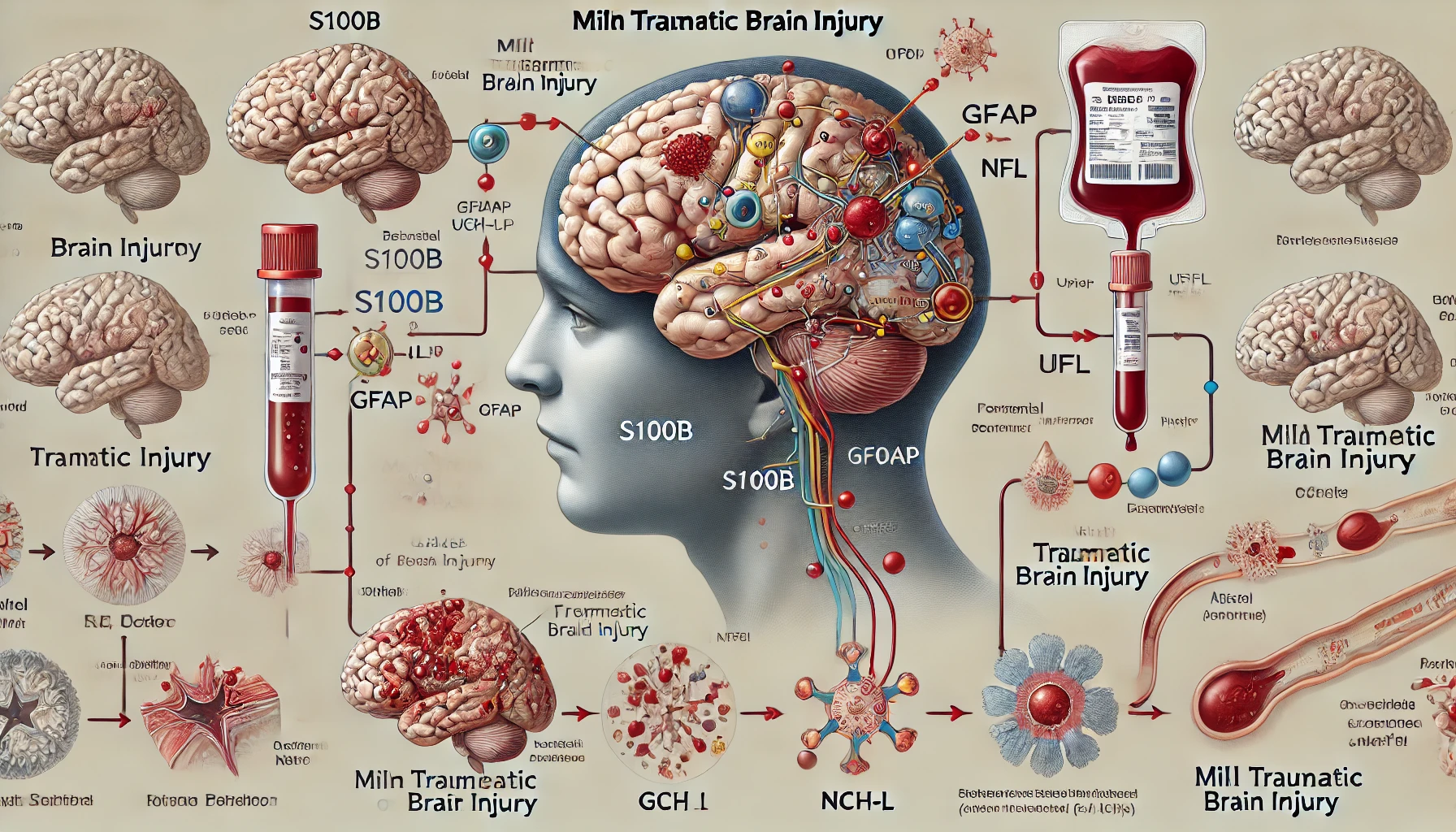
    Several studies have demonstrated that elevated levels of S100B, GFAP, UCH-L1, and NFL correlate with …

    Read more
    0 FacebookTwitterPinterestEmail
  • 1
  • 2
  • 3
  • Novel Approach for Assessment of Dermal Absorption of Extracellular Vesicle Products using Immunoaffinity Fluorescent Nanodiamonds
    Study Overview The assessment of dermal absorption, specifically in the context of extracellular vesicle products,…
  • Efficacy and acceptability of dienogest among patients with endometriosis in Thailand
    Efficacy of Dienogest Dienogest, a progestin widely used in the treatment of endometriosis, has demonstrated…
  • Osmotin-derived 9-amino-acid peptide alleviates α-synuclein and MPTP-induced glial cell activation mediated neuroinflammation, protecting dopaminergic neurons in Parkinson’s disease mice brain
    Study Overview The research investigates the potential therapeutic effects of a specific peptide derived from…
  • Biomarker role in assessing imaging needs for mild cranial trauma (BRAIN-CT): study protocol for a single-center, randomized controlled trial
    Study Overview This study aims to evaluate the efficacy of specific biomarkers in determining the…
  • Spinal Cord Tau and Protein Copathologies Associated With Chronic Traumatic Encephalopathy
    Spinal Cord Pathology Insights The spinal cord plays a critical role in transmitting signals between…

Archives

  • January 2026
  • December 2025
  • November 2025
  • October 2025
  • September 2025
  • August 2025
  • July 2025
  • June 2025
  • May 2025
  • April 2025
  • March 2025
  • February 2025
  • November 2024
  • October 2024
  • September 2024
  • July 2024
  • June 2024
  • May 2024
  • April 2024
  • March 2024
  • February 2024

Categories

  • Biomarkers
  • Brain & Art
  • Brain & Crime
  • Chronic Traumatic Encephalopathy
  • Cognitive impairment
  • Cranial nerves
  • Dementia
  • Diagnostic Criteria
  • Functional neurological disorders
  • Headaches
  • Medical professionals
  • Neuroanatomy
  • Neurology Pioneers
  • Neuroscience
  • NeuroVideos
  • Patient education
  • Post traumatic epilepsy
  • Post traumatic headache
  • Research
  • Traumatic brain injury
  • Uncategorized

Research

  • Clinical Cut Point for the Post Concussion Symptom Inventory Following Adolescent Concussion
    CONCLUSIONS: Our results suggest a PCSI cut point of 23 can distinguish between adolescents with/without a recent concussion and may provide enhanced accuracy to identify a suspected concussion in the subacute time after injury.
  • Sex Differences in Severity and Recovery Following Mild Traumatic Brain Injury: A Systematic Review
    Background: Sex-based variations in brain structure, hormonal balance, and neurochemistry may influence symptom presentation and recovery after mild traumatic brain injury (mTBI). This systematic review investigated sex-related differences in mTBI severity, symptoms, and recovery outcomes across different injury mechanisms. Methods: This review followed PRISMA 2020 guidelines and was registered with PROSPERO (CRD420251011379). Searches were conducted […]
  • Driving After Concussion: The Influence of Days Since Concussion on Simulated Driving Performance Recovery
    CONCLUSIONS: Clinicians should consider recommendations that support limited driving during the acute stages (24-72 hours) of concussion followed by a gradual return to driving. A longitudinal study design in a larger sample is needed to better define driving performance recovery following concussion.
  • Non-Pharmacological Approaches to Addressing Overweight and Obesity in Children and Adolescents with Mental Illness: A Scoping Review of Quantitative and Qualitative Evidence
    Children and adolescents with mental illness are at increased risk of developing overweight and obesity, a relationship that is complex, bidirectional, and often exacerbated by the weight-related side effects of psychotropic medications. This review addressed the research question: How are overweight and obesity addressed in children and adolescents with mental illness? Following JBI and PRISMA-ScR […]
  • A Prefrontal Neuromodulation Route for Post-Traumatic Olfactory Dysfunction: A Perspective Supported by Recovery During Left-DLPFC rTMS
    Post-traumatic olfactory dysfunction (PTOD) is a common and often persistent sequela of mild traumatic brain injury (mTBI), with limited evidence-based treatment options. We propose that high-frequency rTMS applied to the left dorsolateral prefrontal cortex (DLPFC) may support olfactory recovery via top-down modulation of distributed olfactory, attentional, and reward networks, and we outline key mechanistic and […]

Newsletter

Subscribe my Newsletter for new blog posts, tips & new photos. Let's stay updated!

  • Facebook
  • Twitter
  • Linkedin
  • Youtube
  • Email
myneuronews.com
  • Home
  • Traumatic brain injury
  • Functional neurological disorders
  • Dementia
  • Headaches
myneuronews.com
  • Home
  • Traumatic brain injury
  • Functional neurological disorders
  • Dementia
  • Headaches
@2021 - All Right Reserved. Designed and Developed by PenciDesign