Top Posts
Post-traumatic headache: Treatment Overview
The starry night
Distinguishing Mild Neurocognitive Disorder Due to TBI in...
The Moors Murders: A Chilling Crime and the...
Traumatic Brain Injury and Cognitive Decline: Exploring the...
The Neurobiology of a Killer: Understanding Christopher Halliwell’s...
Exploring the Role of Salivary Biomarkers in Mild...
Traumatic Brain Injury and the Risk of Dementia:...
Understanding Functional Neurological Disorder (FND): A Comprehensive Guide...
Overview of Classification Systems and Diagnostic Criteria for...
  • Home
  • Traumatic brain injury
  • Functional neurological disorders
  • Dementia
  • Headaches
myneuronews.com
"Insights into mTBI, PCS, and FND — One Synapse at a Time" A bit more creative, nodding to neuroscience roots while covering your full range.
Category:

Biomarkers

  • BiomarkersTraumatic brain injury

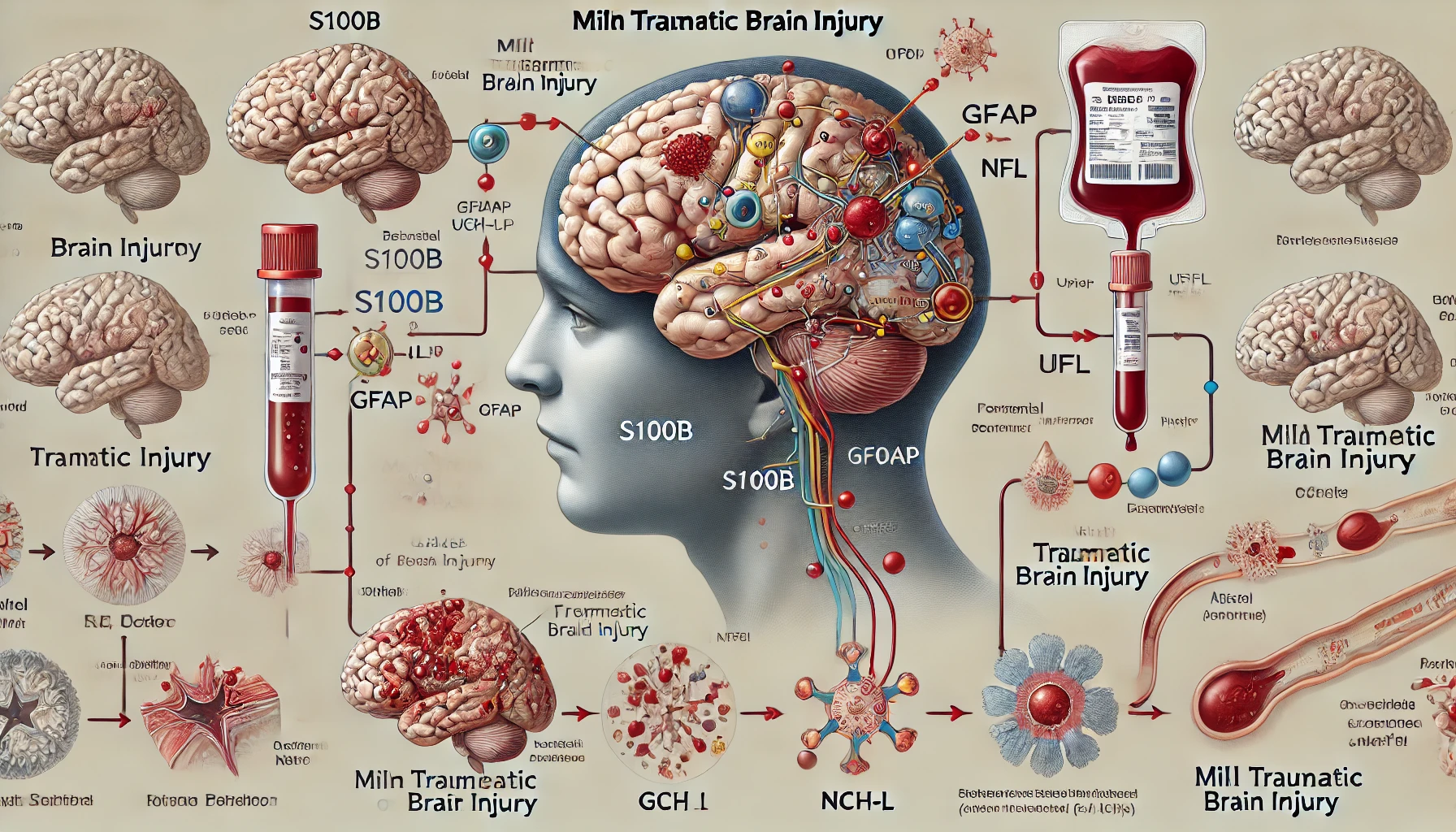
    Exploring the Role of Salivary Biomarkers in Mild Traumatic Brain Injury Diagnosis

    by Ioannis Mavroudis November 16, 2024
    by Ioannis Mavroudis November 16, 2024

    Abstract: Mild Traumatic Brain Injury (mTBI) is a significant public health concern, with its diagnosis …

    Read more
    0 FacebookTwitterPinterestEmail
  • BiomarkersTraumatic brain injury

    Blood biomarkers in mTBI

    by Ioannis Mavroudis June 22, 2024
    by Ioannis Mavroudis June 22, 2024

    Several studies have demonstrated that elevated levels of S100B, GFAP, UCH-L1, and NFL correlate with …

    Read more
    0 FacebookTwitterPinterestEmail
  • BiomarkersMedical professionalsTraumatic brain injury

    Salivary biomarkers in Post-concussion syndrome

    by Ioannis Mavroudis February 12, 2024
    by Ioannis Mavroudis February 12, 2024

    Traumatic brain injuries (TBIs), particularly mild TBIs, present a complex diagnostic challenge due to their …

    Read more
    0 FacebookTwitterPinterestEmail
  • Efficacy and safety of relugolix therapy for symptomatic uterine fibroids: a systematic review and meta-analysis
    Efficacy of Relugolix Relugolix, an oral gonadotropin-releasing hormone (GnRH) antagonist, has demonstrated notable efficacy in…
  • Disclosure of onset-predictive biomarker results to research participants at risk of genetic frontotemporal dementia: a European perspective
    Background on Genetic Frontotemporal Dementia Genetic frontotemporal dementia (FTD) is a group of neurodegenerative disorders…
  • DCPat-XFE: an explainable EEG model for psychogenic nonepileptic seizure detection
    Study Summary The study presents the DCPat-XFE model, designed to enhance the detection of psychogenic…
  • Prevalence of Vestibular Disorders in Moderate-Severe Traumatic Brain Injury (TBI): A Scoping Review
    Study Overview The focus of this scoping review is to explore the prevalence of vestibular…
  • Association of sports and physical activity with mild traumatic brain injury and behavioral and neurocognitive function
    Study Overview The article investigates the relationship between engagement in sports and physical activities and…

Archives

  • December 2025
  • November 2025
  • October 2025
  • September 2025
  • August 2025
  • July 2025
  • June 2025
  • May 2025
  • April 2025
  • March 2025
  • February 2025
  • November 2024
  • October 2024
  • September 2024
  • July 2024
  • June 2024
  • May 2024
  • April 2024
  • March 2024
  • February 2024

Categories

  • Biomarkers
  • Brain & Art
  • Brain & Crime
  • Chronic Traumatic Encephalopathy
  • Cognitive impairment
  • Cranial nerves
  • Dementia
  • Diagnostic Criteria
  • Functional neurological disorders
  • Headaches
  • Medical professionals
  • Neuroanatomy
  • Neurology Pioneers
  • Neuroscience
  • NeuroVideos
  • Patient education
  • Post traumatic epilepsy
  • Post traumatic headache
  • Research
  • Traumatic brain injury
  • Uncategorized

Research

  • Prevalence of Vestibular Disorders in Moderate-Severe Traumatic Brain Injury (TBI): A Scoping Review
    CONCLUSION: Vestibular dysfunction is prevalent among individuals with moderate-to-severe TBI, although the methods of assessment vary. Future studies should aim to be more consistent in documenting the severity of TBI, the evaluation of vestibular dysfunction, and determining interventions that are most beneficial for this population.
  • Association of sports and physical activity with mild traumatic brain injury and behavioral and neurocognitive function
    CONCLUSION: Participation in soccer and/or climbing showed positive associations with mTBI, while participation in yoga showed a negative association. Sports/PA participation was related to better behavioral/emotional and neurocognitive functioning, regardless of children's injury history.
  • Educational Perspectives on Compassionate Concussion Care: A Scoping Review
    CONCLUSION: This review highlights the implicit paradigms shaping concussion-care education and their limitations for cultivating compassion. Constructivism offers the most promise for advancing compassionate practice by fostering collaboration, reflection, and learner agency. Given the interpersonal, cognitive and contextual demands of concussion care, adopting a constructivist orientation may better prepare physicians to meet patient and caregiver […]
  • A challenge to improve the Quality of Care.Rehabilitation outcome measures in the Emergency Department: a scoping review
    CONCLUSIONS: The use of validated outcome measures by physiotherapists in EDs is feasible and clinically valuable; however, a lack of standardization and limited high-quality evidence particularly within the Italian healthcare context highlight the need for further research to establish shared outcome sets and transferable models of care.
  • Gaps in Access to Cognitive Rehabilitation Referrals Among Veterans with Mild Traumatic Brain Injury
    CONCLUSIONS: These results suggest that while cognitive rehabilitation services tend to be allocated to those in need, significant gaps in access exist. Findings lay the foundation for developing strategies that expand access to beneficial cognitive rehabilitation among Veterans with mTBI, reducing their cognitive symptoms and enhancing their daily function.

Newsletter

Subscribe my Newsletter for new blog posts, tips & new photos. Let's stay updated!

  • Facebook
  • Twitter
  • Linkedin
  • Youtube
  • Email
myneuronews.com
  • Home
  • Traumatic brain injury
  • Functional neurological disorders
  • Dementia
  • Headaches
myneuronews.com
  • Home
  • Traumatic brain injury
  • Functional neurological disorders
  • Dementia
  • Headaches
@2021 - All Right Reserved. Designed and Developed by PenciDesign